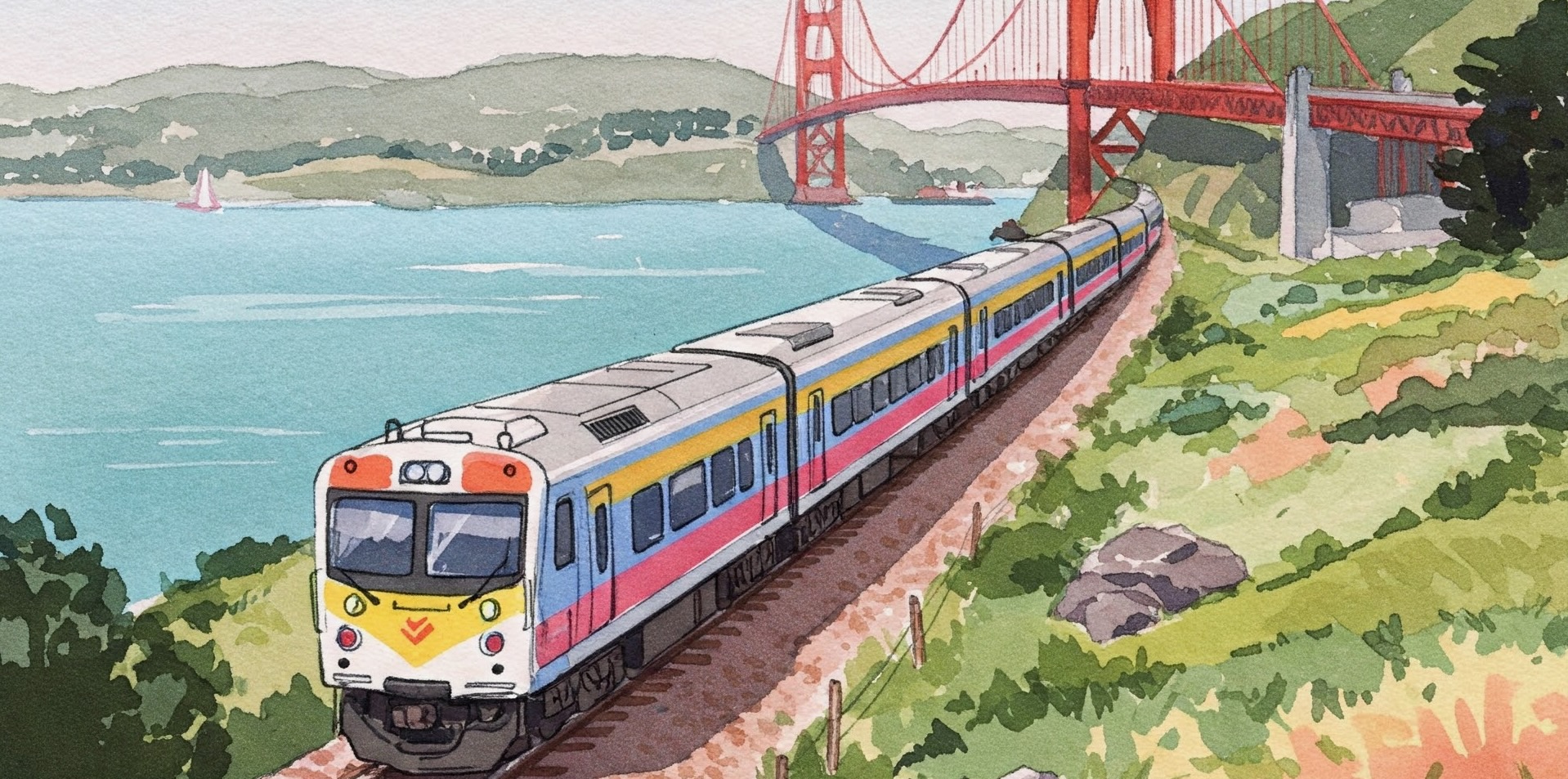
I was recently on a work trip in the Bay Area and took the Caltrain from San Francisco to San Jose. When I last took Caltrain in early 2024 I rode one of the last diesel-powered trains, but by this trip they had fully moved to the new electric ones (some diesel trains are still being used south of San Jose but not on the route I took).
I was impressed! I’m a transit super-fan, and whenever I’m in a new place I ride their public transit (preferably some kind of train) just for the fun of it. I’ve seen good systems and bad ones, so I know what I’m talking about when I say Caltrain has had a serious glow-up. What I didn’t expect was the impact that glow-up would have on the average non-railfan1.
My trip on Caltrain
The train from San Francisco to San Jose runs once every 30 minutes all day, including weekends. Weekday peak hours it’s even more than that. That level of service is pretty good. Until their modernization project though, the rest of the experience wasn’t good — the old diesel trains were noisy, cramped, and uncomfortable.
Fast-forward to today and Caltrains has completed a decade-spanning electrification and modernization project. As part of that project, they’ve added electric wires between San Francisco and San Jose and replaced all of their trains with new, fully-electric Stadler KISS trains (these are the same one I rode in Switzerland and which are used across Europe).
My ride was pleasant. It was smooth and quiet, without the loud honking, creaks, and groans from the old trains. Each compartment also has wifi and nice tables to sit at, so I was able to get some work done on my laptop. Best of all, the seats were spacious, comfortable, and modern-looking. The whole experience felt futuristic and luxurious, which is shocking to us American transit-riders who are used to being relegated to equipment that’s older than we are.
To my surprise, people love Caltrain
What really struck me wasn’t just the improvements themselves — it was how much everyone else seemed to notice. While I love all trains, I don’t expect others to. I recognize that my devotion is eccentric. That’s why I was surprised that across the board, all of my friends brought up how great the new electric Caltrains were when I mentioned my trip to the bay. Everyone seems to have heard about and love the new electric Caltrain.
That experience matched what I overheard aboard the train too. A Giants game had just ended so it was full of people who don’t regularly commute on it. What I overheard shocked me — people said things like “this train is so modern, I’d take it again” and “this is better than driving up”. One man was asking his girlfriend how she liked it and she remarked how clean it was, saying she’d like to ride it again for the next game.
What I didn’t hear was anyone mention the schedule or how frequent the train came. Everyone was focused on how modern and comfortable it was, a complete inversion of my priorities when considering transit.
Aesthetics matter
As someone who cares a lot about transit, I stand by my belief that the most important qualities of a transit system are its frequency and where the stations are located (ie. that you don’t have to wait long for a train to arrive and that it brings you where you need to go). At the end of the day, the goal of transit is to take you from A to B reliably and quickly.
However, I sometimes forget how important non-functional qualities are to people when making decisions. The reality is unless people perceive the ride to be safe and comfortable, they’ll be skeptical to ride public transit over the comfort of a car.
Since the best thing we can do for a system is get more people riding it, we need to care about aesthetics. More riders means more fare money for the system, and more importantly it means more people willing to vote in favor of measures which improve transit. We need to invest in making transit luxurious.
I still believe the best way to make a system useful to its riders is to improve its frequency and expand it to new neighborhoods. The reality though is that we need as many people as possible riding transit so we can build a broad coalition of supporters. Caltrain shows that doing that may sometimes mean prioritizing form over function. Once people are onboard, we can get them voting for other measures that make the system work better for everyone2.
-
There are lots of terms for people who like trains. Railfan or transpotter are some of the more polite ones, and I personally think ferroequinologist sounds really cool. ↩︎
-
I didn’t even mention the fact that Caltrain’s modernization takes it one step closer to eventually upgrading to 110mph operation up from 79mph speeds — a great example where function and form co-exist! ↩︎